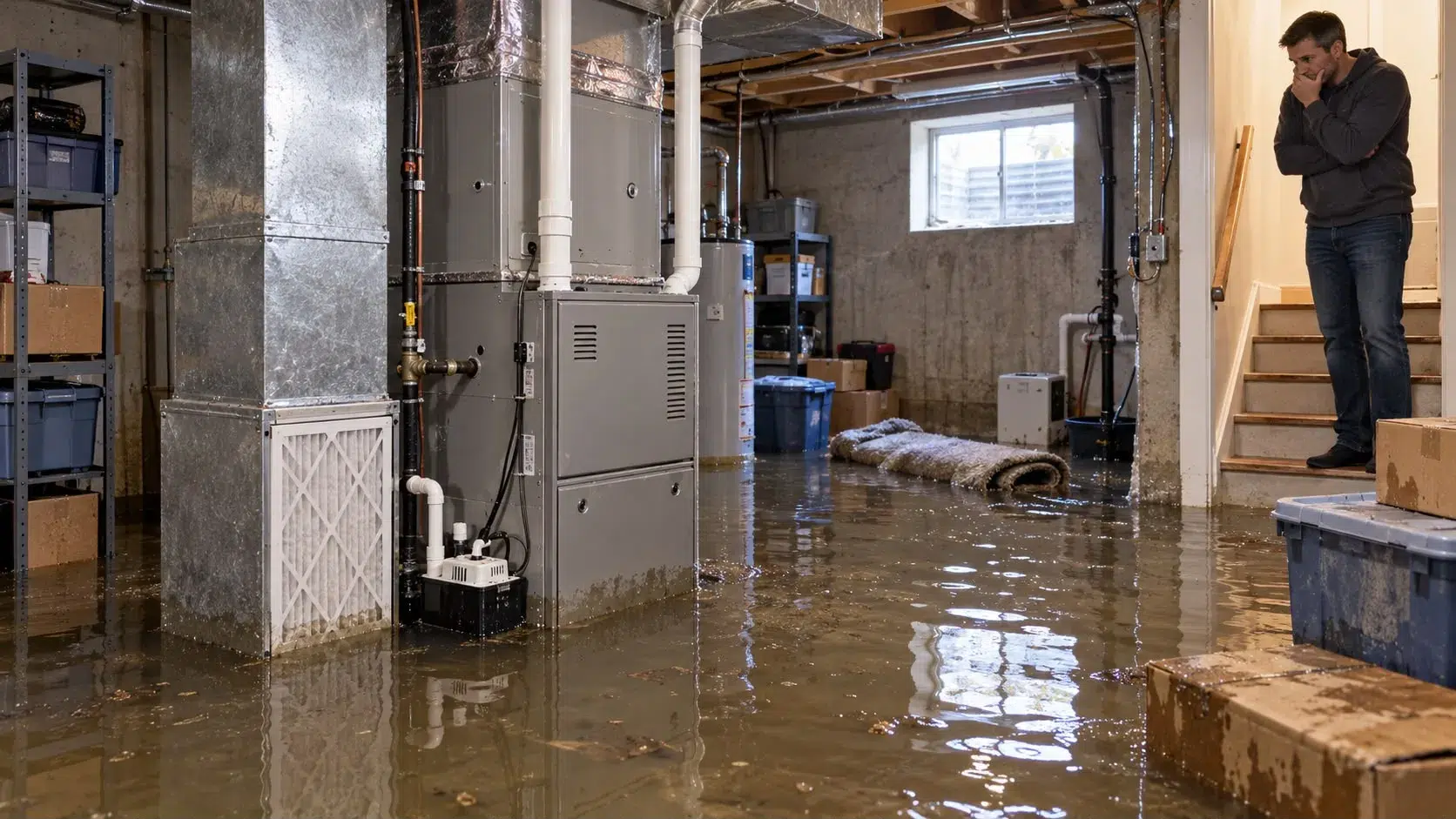
When an Ottawa basement floods, the damage may extend beyond the furnace. The filter cabinet, return boot, condensate pump, drain hoses, evaporator coil, ductwork, water heater, and the area beneath the equipment may also be affected.
A complete HVAC inspection and detailed report can help your insurance adjuster understand the full extent of the damage—not just the condition of the furnace.
This article covers water entering the HVAC system from an outside source, such as a burst pipe, basement flood, or sewer backup. Water leaking from the air-conditioning system itself, such as a blocked condensate drain or damaged drain pan, is a different issue.
Do Not Turn On Flood-Exposed Equipment
Do not turn on a furnace, water heater, air conditioner, or other HVAC equipment that has been exposed to water. Do not use the furnace blower to help dry the basement.
If it is safe to do so:
- Take photos of the water level and affected equipment before cleanup begins.
- Do not touch electrical equipment, switches, or wiring while standing in water.
- Do not allow anyone to test-run the equipment before it has been inspected.
- Contact your insurance provider, a qualified flood-restoration company, and an HVAC professional.
Operating flood-exposed equipment may create electrical or mechanical hazards. If the water was contaminated, running the blower may also spread pollutants through the HVAC system.
Was It Clean Water or Contaminated Water?
The water source is one of the most important factors in deciding whether HVAC equipment can be repaired.
Verified Clean Water
Equipment exposed to water from a verified clean source, such as a broken potable-water pipe, may be considered for repair only after a professional assessment and review of the manufacturer’s requirements. Some components—or the complete appliance—may still require replacement.
A technician must consider:
- How high the water reached and how long the equipment remained wet
- Which electrical and mechanical components were affected
- Whether the equipment operated while wet
- The age and previous condition of the equipment
- The total cost of parts, labour, and safety testing
The system must pass the required safety and performance checks before it can return to service. Water source alone does not determine whether equipment is safe or repairable.
Sometimes repair is possible but replacement is more economical. If several major components—such as the blower motor, control board, transformer, gas valve, or wiring—have been damaged, the total repair cost may be close to or higher than the cost of new equipment. Zenith can compare both options and document the recommended solution.
Contaminated Water
Sewage, sewer backup, surface runoff, and general floodwater may contain bacteria, chemicals, soil, oil, and other contaminants. If a clean source cannot be verified, the water should be treated as potentially contaminated.
When contaminated water reaches HVAC equipment, contamination may remain inside the system and enter the home’s airflow. Depending on the water level, affected items may include:
- The furnace or water heater
- The filter and filter cabinet
- The return boot
- The condensate pump
- Drain hoses and related piping
- Other HVAC components that contacted the water
Zenith’s approach is to replace primary HVAC equipment and components that have had direct contact with sewage or other contaminated water.
Replacing Only the Furnace May Not Be Enough
On some flood-damage projects, the furnace is replaced while the contaminated filter cabinet and return boot remain in place. This is not a complete solution.
These components are part of the return-air system, and contamination can remain in seams, joints, insulation, and other areas that are difficult to clean. Connecting a new furnace to contaminated return-air components may carry pollutants into the new equipment and through the home.
When the filter cabinet and return boot have contacted contaminated water, Zenith recommends replacing them along with the affected filter.
The Area Beneath the Furnace Must Be Disinfected
After the damaged furnace is removed, the floor and surrounding area must be professionally cleaned and disinfected before new equipment is installed. Contaminated porous materials or insulation that cannot be reliably cleaned should also be removed.
Water extraction, structural cleanup, and building decontamination must be completed by a qualified flood-restoration company. A new furnace should not be installed on a contaminated surface.
What About the Evaporator Coil?
The evaporator coil is normally installed above the furnace and may be above the visible water line. However, the coil, drain pan, casing, and internal insulation still need to be inspected.
If contamination is found, the evaporator must be professionally cleaned and disinfected or replaced. Replacement may be the safer option when contamination is severe, internal insulation is affected, corrosion is present, or reliable decontamination cannot be confirmed.
What If the Furnace Blower Was Running?
If contaminated water reached the return boot, filter cabinet, or blower compartment and the blower operated—even briefly—pollutants may have travelled farther into the HVAC system.
The inspection should then include:
- The evaporator coil and drain pan
- The inside of the coil casing and supply plenum
- Accessible return and supply ducts
- Internal duct insulation
- Nearby registers and airflow pathways
Running the blower does not automatically mean that the entire duct system must be replaced, but it is an important reason to investigate possible secondary contamination. Metal ductwork may be suitable for professional cleaning and disinfection, while wet or contaminated internal insulation will generally need replacement.
Why a Complete HVAC Report Matters for Insurance
If a report mentions only the furnace, the insurance assessment may not include all the work required to restore the HVAC system safely and completely.
Zenith inspects the affected system as a whole and can prepare a detailed report that may include:
- The source and type of water and the observed water level
- Photos of affected equipment and components
- Equipment makes, models, and serial numbers
- Whether the equipment operated after the flood
- Components requiring replacement or decontamination
- Safety concerns and repair-versus-replacement recommendations
- An itemized estimate of the required HVAC work
This documentation helps explain why replacing only the furnace may not fully address the HVAC damage. Final coverage and payment remain subject to the customer’s insurance policy and the insurer’s approval. Zenith can document the damage and recommended work but cannot guarantee approval or payment of a claim.
Safe and Complete Reinstallation
Zenith’s goal is not simply to replace the furnace. Before new equipment is installed, contaminated HVAC components must be removed, the installation area must be properly prepared and disinfected, and the evaporator and ductwork must be addressed when necessary.
New equipment is installed according to the manufacturer’s instructions and applicable safety requirements. Depending on the equipment and conditions, final testing may include gas and electrical connections, gas-leak testing, ignition, airflow, condensate drainage, combustion, carbon monoxide, and overall system operation.
Request a Flood-Damage HVAC Inspection in Ottawa
If your furnace, water heater, or other HVAC equipment has been exposed to water, do not turn it on.
Basement flooded? Do not operate your furnace or HVAC equipment. Call Zenith for an inspection before turning the system back on.
Contact Zenith Eco Energy for a complete HVAC inspection and detailed documentation for your insurance claim.
Call 613-800-9022 or submit an appointment request online.
Zenith provides HVAC inspection, documentation, repair, replacement, and safe equipment installation. Water extraction, structural cleanup, and building decontamination must be completed by a qualified flood-restoration company.
