Why Furnace Maintenance Matters
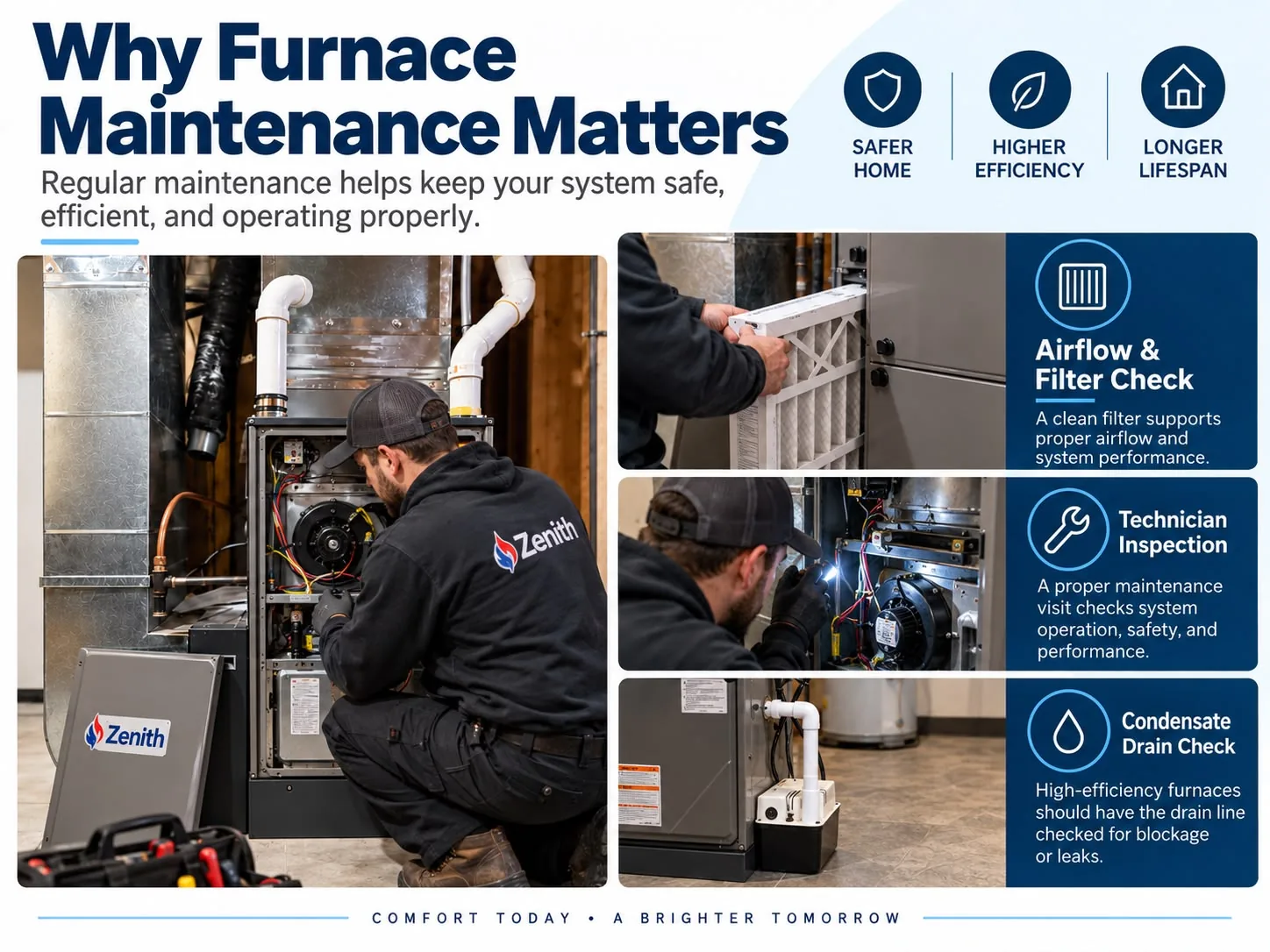
Your furnace works hard through Ottawa’s long heating season. Regular maintenance can help identify small problems early, improve performance, and make sure the system is operating safely and properly.
A good furnace maintenance visit should be more than cleaning and changing the filter. It should look at how the whole system is operating, including combustion, airflow, temperature, drainage, venting, and safety controls.
When Is the Best Time for Furnace Maintenance?
A good time for furnace maintenance is after the heating season has started and the furnace has been running regularly for several days.
Some problems are easier to identify once the system has been operating under normal heating demand.
For Ottawa homeowners, this usually means after the weather has turned cold, but before the extreme winter temperatures arrive.
What Should Furnace Maintenance Include?
Depending on the system, a proper maintenance visit may include:
- Heat exchanger inspection
- Burner and ignition operation
- Gas pressure and combustion
- Blower operation and cleanliness
- Furnace filter
- Airflow and temperature rise
- Venting and combustion-air intake
- Condensate drain and trap
- Electrical connections
- Safety controls
- Thermostat operation
A furnace can look clean and still have operating problems. Maintenance should focus on how the system actually performs.
Why Airflow Is So Important
Proper airflow is essential for furnace operation.
When airflow is restricted, the furnace may run too hot and can develop problems such as:
- Furnace overheating
- High-limit trips and short cycling
- Extra stress on the heat exchanger
- Extra stress on the blower
- Uneven heating
- Longer run times and higher energy use
- Excessive airflow noise
- Excessive heat around the evaporator coil and drain pan
The same airflow problem can also affect your air conditioner in summer and may contribute to poor cooling or evaporator coil freezing.
Common causes of low airflow include dirty or undersized filters, restricted return ducts, dirty blower wheels, restricted evaporator coils, closed registers, or undersized ductwork.
The furnace itself is not always the problem.
Temperature Rise and Static Pressure
Temperature rise is the difference between the air entering and leaving the furnace.
Every furnace has a manufacturer-specified temperature-rise range. If the temperature is too high, restricted airflow may be one possible cause.
Static pressure can also help identify restrictions in filters, ductwork, coils, or other parts of the system.
A new furnace can still perform poorly if the surrounding duct system cannot move the airflow the equipment requires.
High-Efficiency Furnaces Need Drainage Checks
High-efficiency furnaces produce condensate water during normal operation.
The condensate drain, trap, tubing, and pump, if installed, should be checked for blockage or leakage.
Venting and outside intake pipes should also be kept clear, especially after heavy snow.
What Homeowners Can Do
Between maintenance visits, homeowners can:
- Check and replace filters regularly
- Keep return grilles and supply registers clear
- Keep outdoor intake and exhaust pipes clear
- Watch for unusual noises
- Pay attention to repeated cycling
- Call for service if there is water around the furnace or noticeable changes in performance
Gas, combustion, electrical, and safety-related work should be left to a qualified technician.
Does Maintenance Prevent Every Breakdown?
No.
Maintenance can help identify problems early and improve operating conditions, but no maintenance visit can guarantee that a mechanical or electrical component will never fail.
How Often Should a Furnace Be Maintained?
For most residential gas furnaces, annual maintenance is a reasonable schedule.
The furnace filter should be checked much more often than once a year.
Furnace Maintenance Is More Than Cleaning
A proper maintenance visit should answer one important question:
Is the furnace operating properly as part of the complete HVAC system?
That means looking at airflow, combustion, temperature, drainage, venting, blower operation, and safety controls together.
If your furnace is cycling frequently, heating unevenly, making unusual noises, or showing signs of overheating, you do not need to wait for your annual maintenance visit.
