
How Fresh-Air Ventilation Removes Stale Air and Improves Indoor Air Quality
By Matt Zare
Does a bedroom feel stuffy by morning even though your furnace filter is clean? Does condensation collect on your windows in winter? Those problems can have several causes, but they are good reasons to check how fresh air enters and stale air leaves your home.
Odours, moisture, carbon dioxide (CO2) and pollutants generated by cooking, showering, cleaning products, furnishings, pets and occupants can remain indoors. Opening a window may help temporarily, but it does not provide consistent or controlled ventilation—especially during an Ottawa winter or on days affected by heat, humidity, pollen or wildfire smoke.
A properly designed HRV or ERV brings in outdoor air and removes indoor air while recovering some heating or cooling energy. Whether your Ottawa home needs one—and which type works best—depends on its existing ventilation, humidity and airflow.
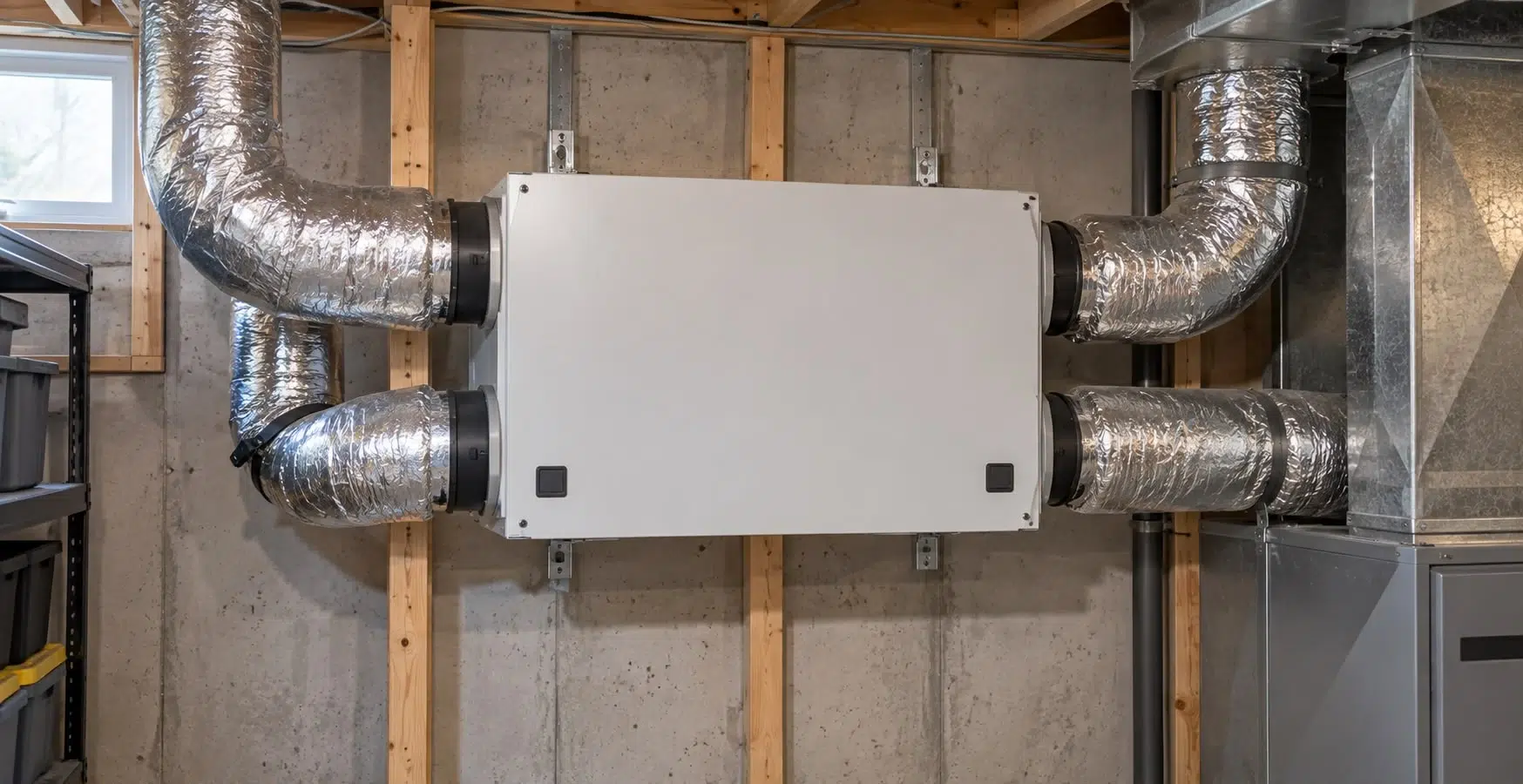
Quick answer: An HRV may suit a home with excess winter moisture; an ERV may help a home that becomes too dry in winter or needs to limit incoming humidity in summer. Neither choice should be made from climate or square footage alone.
What Is the Difference Between Air Circulation and Ventilation?
Air circulation and ventilation are not the same thing.
When the furnace blower operates, it pulls air from inside the home through the return ducts, moves it through the filter and HVAC equipment, and sends it back through the supply ducts.
Unless the system has a dedicated outdoor-air connection, operating the furnace fan does not bring fresh air into the home. It only recirculates the air that is already inside.
An HVAC filter can capture some particles from the circulating air, but it cannot remove CO2 or replace outdoor air. An air purifier may address certain pollutants, but it is not a ventilation system. If you are also reviewing filtration, see our guide to choosing the right furnace filter without restricting airflow.
Ventilation involves bringing outdoor air into the home, removing stale indoor air, distributing fresh air to the appropriate rooms and maintaining reasonably balanced indoor pressure.
What Are the Signs of Inadequate Home Ventilation?
No single symptom proves that a home needs an HRV or ERV. However, these conditions may indicate that the ventilation system should be evaluated:
- Cooking and household odours remain for a long time
- Bedrooms or other rooms feel stuffy
- CO2 rises while people are sleeping or when several people occupy the home
- Condensation forms on windows during winter
- Bathrooms or other areas remain excessively humid
- Mould or moisture staining appears
- Windows must be opened frequently to make the air feel better
- Bathroom or kitchen exhaust is ineffective
- An existing HRV or ERV is blocked, turned off or not balanced
These symptoms can have other causes. Window condensation may also result from very cold surfaces, poor windows or inadequate air circulation. Mould requires the moisture source to be identified and corrected. The purpose of an assessment is to find the actual problem before recommending equipment.
What can you check first? Confirm that bathroom and kitchen fans actually exhaust outdoors, use them when generating steam or cooking, and check whether an existing HRV or ERV is running and its exterior hoods are clear. Follow the unit manual before opening or cleaning it. Persistent condensation, odours or stuffiness call for a closer look at airflow and moisture sources.
What Is an HRV and How Does It Work?
HRV stands for heat recovery ventilator. It manages two separate airstreams:
- Stale, moisture-laden indoor air is exhausted.
- Fresh outdoor air is brought into the home.
The airstreams do not mix directly. They pass on opposite sides of a heat-exchange core. During winter, some heat from the outgoing air is transferred to the cold incoming air. During summer, cooler exhaust air can absorb some heat from the incoming outdoor air.
An HRV does not recover all the energy, but it reduces heating or cooling loss compared with open windows or an uncontrolled outdoor-air connection.
An HRV generally does not return a significant amount of moisture to the incoming air. This can help remove excess indoor moisture in winter. However, an HRV is not a dehumidifier.
What Is an ERV and How Is It Different?
ERV stands for energy recovery ventilator. Like an HRV, it removes stale air and supplies outdoor air. The main difference is that its core transfers some moisture in addition to heat.
During winter, an ERV can return some moisture from the outgoing air to the dry incoming air, which may help prevent certain homes from becoming excessively dry.
During summer, it can transfer some moisture from the warm, humid incoming air to the outgoing airstream, reducing part of the moisture brought in with ventilation air.
An ERV is not a dehumidifier either. A home with excessive summer humidity may still need its air-conditioning system and moisture sources assessed or may require dedicated dehumidification.
HRV vs. ERV: Which Is Better for an Ottawa Home?
There is no single answer for every home.
An HRV may be more suitable for a highly occupied or very airtight home with excessive winter humidity or significant window condensation. An ERV may be more suitable when the home becomes excessively dry in winter or when retaining some indoor moisture is beneficial.
For example, if several people live in a tight home and the windows regularly collect condensation in January, recovering more indoor moisture may work against the goal of removing it. If the home is already very dry, exhausting that moisture without recovery could make comfort worse. These are starting points for an assessment, not rules for choosing equipment on their own.
The decision should consider:
- Number of occupants
- Home size, layout and airtightness
- Actual indoor humidity during winter and summer
- Existing humidifier or dehumidifier
- Air-conditioner performance
- HVAC and ventilation duct design
- Required outdoor airflow
- Manufacturer requirements
Ottawa’s cold climate alone does not make an HRV the correct choice for every home, and an ERV is not automatically the better option.
Not sure which system your home needs? Zenith Eco Energy can inspect the existing equipment, ductwork, airflow and balance before recommending an HRV, ERV or another solution.
What Is the Role of Bathroom and Kitchen Exhaust?
Local exhaust remains an important part of home ventilation.
A bathroom fan should remove moisture and odours directly to the outdoors. If the fan is weak, its duct is restrictive or it terminates in the attic, moisture can remain in the building and create problems.
A kitchen range hood should remove cooking pollutants, heat, steam and odours close to the source. A recirculating hood that filters air and returns it to the kitchen does not perform the same function as a hood vented outdoors.
An HRV or ERV does not replace effective bathroom exhaust or a properly vented kitchen hood. A good indoor-air strategy combines source control, local exhaust and whole-home ventilation.
Why Do Sizing, Duct Design and Balancing Matter?
The ventilation equipment and ductwork must deliver the required airflow without excessive noise, energy use or pressure problems. Sizing should consider occupancy, bedrooms, layout, airtightness and air-distribution design—not only square footage.
If the unit or ducts are too small, the fans may need to run faster, creating more noise and poor air distribution. If the unit is oversized or incorrectly controlled, it may ventilate more than necessary, dry the home in winter and increase energy use.
In a balanced system, outdoor supply airflow should be coordinated with exhaust airflow. Excessive exhaust may create negative pressure. In homes with naturally vented combustion equipment, pressure changes can become a safety concern and should be assessed by a qualified professional. Excessive supply can create positive pressure and push moisture into cold parts of the building.
Balancing cannot be done accurately by looking at the unit or feeling the air by hand. Supply and exhaust airflow must be measured, then dampers or fan settings adjusted.
The connection to the central HVAC system also matters. Some systems have dedicated ventilation ducts; others introduce outdoor air into the return duct for distribution by the central blower. Incorrect connection locations or controls can short-circuit the ventilation air, reduce distribution or increase static pressure.
The objective is not simply to hang the equipment and connect four ducts. The system must remove stale air from appropriate areas and deliver fresh air where occupants spend time.
Maintenance and Common HRV or ERV Problems
Regular maintenance helps preserve airflow and system balance. Depending on the unit and manufacturer’s instructions, maintenance may include:
- Cleaning or replacing filters
- Cleaning outdoor intake and exhaust hoods
- Removing leaves, snow or ice from exterior screens
- Cleaning the core correctly
- Checking the condensate drain when applicable
- Inspecting fans, controls and unusual noise
- Periodically confirming airflow and balance
Common installation problems include undersized ducts, long or restrictive duct runs, compressed flexible duct, poorly located exterior hoods, incorrect HVAC connections and systems that were never balanced.
A dirty filter or blocked exterior hood can reduce airflow and disturb the balance. Many problems blamed on the equipment are actually caused by duct design, controls, settings or installation.
If an HRV or ERV has never been checked, ask whether its measured supply and exhaust airflow match the intended design. A running fan alone does not confirm that the right amount of fresh air reaches the living spaces.
Can a CO2 Monitor Identify a Ventilation Problem?
Most CO2 generated inside a home comes from occupants’ breathing. When several people remain in an enclosed space without enough outdoor air, the level can increase.
A CO2 monitor can reveal useful patterns, especially in bedrooms and heavily occupied spaces. However, one reading should not be used by itself to select or size an HRV or ERV. Sensor location, accuracy, occupancy and outdoor conditions affect the result. Trends should be reviewed together with humidity, household conditions and system operation.
A CO2 monitor is different from a carbon monoxide alarm. Carbon monoxide, or CO, is a safety hazard. An HRV, ERV, air purifier or general indoor-air-quality monitor does not replace approved and correctly installed CO alarms.
What Problems Can Ventilation Not Solve by Itself?
Ventilation can dilute indoor pollutants and remove stale air, but it does not replace correcting the source of a problem.
An HRV or ERV cannot independently correct:
- A water leak or active moisture source
- Mould without correcting the conditions that caused it
- Carbon monoxide from faulty combustion equipment
- Radon without a dedicated mitigation system
- Particles that require suitable filtration
- Summer humidity that requires actual dehumidification
- Odours caused by sewage, a gas leak or another active source
Improving indoor air quality may require a combination of source control, filtration, ventilation, humidity control and air purification.
Common Questions About HRVs and ERVs
Do I need an HRV if I already have a furnace filter?
A furnace filter captures some particles in air that passes through the HVAC system. It does not, by itself, bring in outdoor air or exhaust stale air. Whether you need an HRV, ERV or another ventilation approach depends on how your home currently gets fresh air.
Can I simply open windows instead?
Opening windows can help when outdoor conditions allow it. It does not provide consistent, controlled airflow throughout the year, especially during cold weather or when outdoor smoke, pollen or humidity is a concern.
Should an HRV or ERV run all the time?
The appropriate schedule and fan speed depend on the home’s ventilation design, the unit’s controls and the household’s needs. Turning a designed ventilation system off for long periods may leave the home with too little fresh air. Check the manual or have the system evaluated rather than assuming one setting suits every home.
How Zenith Eco Energy Evaluates Home Ventilation
Before recommending an HRV, ERV or changes to an existing system, Zenith Eco Energy can review:
- The homeowner’s concerns and how the rooms are used
- Condition of the existing HRV or ERV
- Duct sizes, routing and exterior connections
- Filters, core, fans, controls and condensate drainage
- Bathroom and kitchen exhaust performance
- Connection to the central HVAC system
- Supply and exhaust airflow and system balance
- Indoor humidity and CO2 patterns when relevant
- Possible pressure effects on combustion equipment
The assessment helps determine whether the system needs cleaning, maintenance, repair, balancing, ductwork corrections or replacement.
Zenith Eco Energy provides HRV and ERV inspection, maintenance, balancing, repair and installation in Ottawa.
Does Your Home Need Better Ventilation?
If your home feels stuffy, odours remain for a long time, condensation forms on the windows or you are unsure whether your HRV or ERV is operating correctly, do not begin by automatically purchasing a new unit.
Start by determining how much outdoor air the home requires and how the existing system is performing.
Zenith Eco Energy can assess your ventilation equipment, ductwork, airflow and balance, then explain the appropriate next step.
Call Zenith Eco Energy at 613-800-9022 to request a ventilation assessment.
